Kilimanjaro vs Everest Base Camp is a question we hear almost every week. Let us be straight first: we are a locally owned company in Arusha, Tanzania, we do not sell Everest Base Camp treks or anything else in Nepal, and this article will not pretend otherwise. But most of our climbers weighed both before choosing, so here is the honest comparison we give them.
How high does the Everest Base Camp trek go compared to Kilimanjaro?
Kilimanjaro goes higher. Uhuru Peak stands at 5,895 metres, while Everest Base Camp sits at about 5,364 metres. The shape of the climb matters more than the gap. The Everest Base Camp trek gains altitude slowly over many days, sleeping in villages along the trail. Kilimanjaro gains it fast, which is why route choice and acclimatisation days matter so much here.
How long does each trek take?
Everest Base Camp is the longer commitment, roughly twelve to fourteen days on the trail plus a mountain flight to Lukla that weather sometimes delays. Kilimanjaro takes about a week, five to nine days depending on the route. If your leave is tight, that alone often settles it.
Which trek is harder?
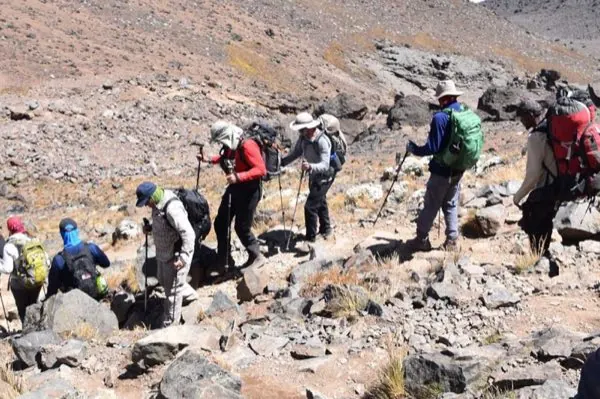
They are hard in different ways, and it would be unfair to Nepal to call either one easy. Everest Base Camp is an endurance test: many days of walking at sustained altitude, with cold teahouse nights and no single brutal day. Kilimanjaro is a summit climb: a compressed ascent ending in one long, cold summit night to the crater rim. Neither needs ropes or technical skill. Cost is structured differently too: EBC runs teahouse to teahouse, while Kilimanjaro is a full expedition with a crew carrying your camp, so we quote per trip rather than publish prices.
When should you go, and how crowded is it?
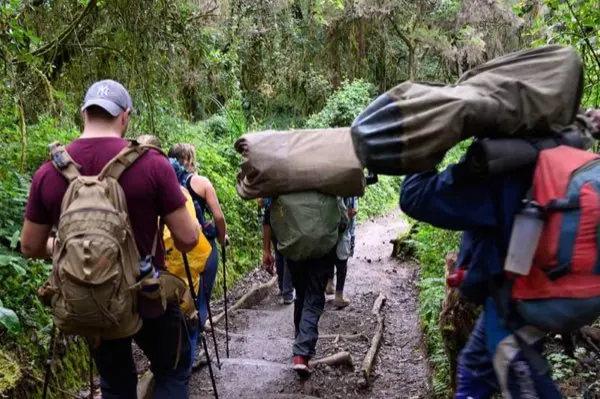
The seasons barely overlap. Kilimanjaro climbs best in the dry windows from January to March and June to October, while the Everest Base Camp trek peaks in spring and autumn, either side of the monsoon. Crowds differ too. EBC funnels nearly everyone up one valley, so high season means a busy trail and full lodges. Kilimanjaro spreads climbers across six routes, and quieter ones like Rongai exist for people who want space.
What does the summit actually mean on each trek?
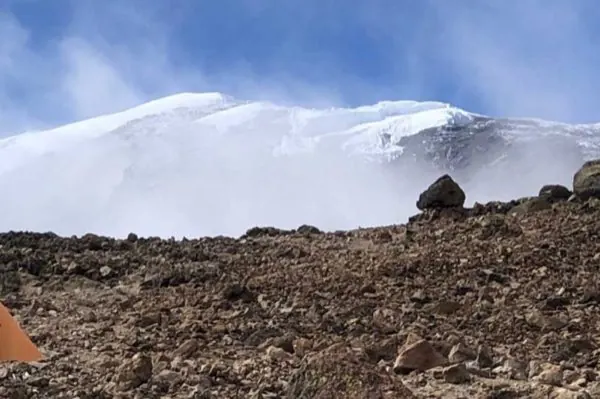
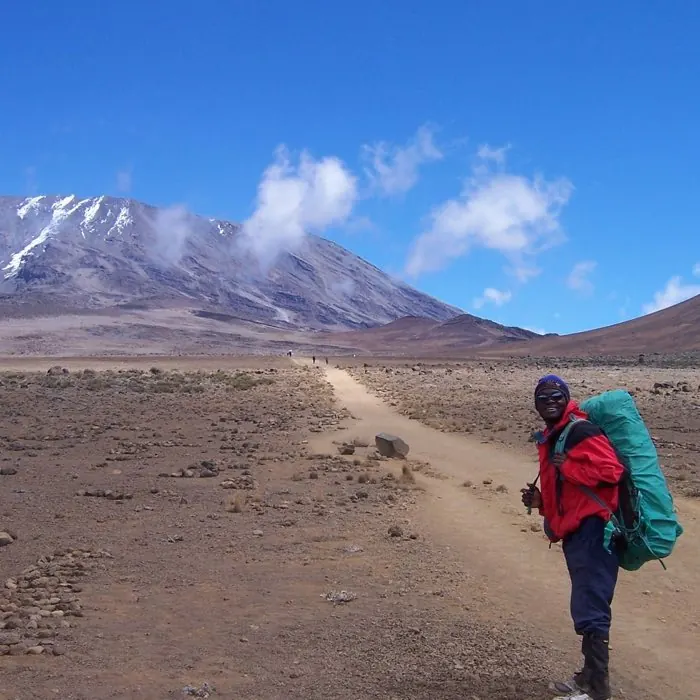
This is the deepest difference. On Kilimanjaro you stand on the summit itself, the highest point in Africa. At Everest Base Camp you stand at the foot of the mountain; Everest’s own summit belongs to mountaineering expeditions, not trekkers. One trip reaches a top; the other walks deep into the biggest mountain scenery on earth. Neither is a lesser goal.
So which trek is right for you?
Different goals, and we only guide one of them.
- Choose the Everest Base Camp trek if the walk itself is the point and you have the days for the Himalaya. Book it with a good Nepali operator.
- Choose Kilimanjaro if you want a true summit, the roof of Africa, inside about a week.
If it is Kilimanjaro, that is the mountain we know. We climb all six routes with KINAPA-licensed, first-aid-certified guides, and our own figure for summit success is 95 to 98 percent. Send us a WhatsApp message and we will talk honestly about whether it fits you, and which route to take.