You do not need to buy a large camera before your first safari. A phone can record landscapes, the atmosphere of a drive and animals that are within a suitable view. A dedicated camera can give you more control and reach, but the useful equipment is equipment you know how to use.
Start by deciding what you want to bring home: a few favourite memories, photographs of animal behaviour, or a collection you intend to print. That choice is more helpful than copying somebody else’s equipment list.
Practise before you leave
With a phone, practise selecting the focus point, adjusting brightness and switching between the lenses your phone actually has. Learn how to start a short video without searching through menus. With a camera, practise changing focus settings and reviewing whether a moving subject is sharp.
Try these controls outdoors before the trip. You should be able to return to a familiar setting after experimenting. A safari sighting is not the easiest moment to learn an unfamiliar menu.
Make a useful picture when the animal is far away
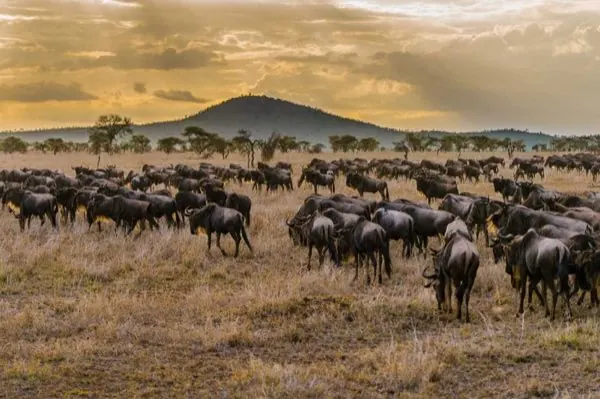
If a distant animal becomes a small blur when enlarged, include more of the scene. The animal’s place in the landscape can make a stronger photograph than an extreme crop. Try a wider frame showing the tree, grass or horizon around it.
Watch the edges of your picture too. A slightly different composition can remove a distracting seat frame or capture more of the setting without needing to move closer to wildlife.
Ask about positioning and give everyone room
Tell your guide that you enjoy photography and explain what you are trying to capture. Let the guide decide where the vehicle can stop and what is appropriate around wildlife. Do not ask for a closer position at the expense of an animal’s space or another visitor’s view.
Keep equipment inside the vehicle and follow the guide’s instructions about where you may leave it. Tanzania National Parks publishes park rules and regulations; the instructions applying to the place you visit take priority over a photograph.
Think about your whole group
Some people love waiting for a particular moment. Others would rather move on after watching for a while. Discuss that difference before the holiday. If photography is the main purpose of your safari, explain that in the enquiry rather than assuming everyone shares the same pace.
Read what a safari day is like and tell your planner which parts matter most. A suitable itinerary starts with your interests, not just your camera model.
Plan charging, storage and protection
Check your available storage before departure and carry the charging cables your devices need. Ask about charging arrangements in the proposed vehicle and accommodation instead of assuming sockets will be available whenever you want them.
Keep a simple way to protect equipment from dust and an easy place to put it down securely. If you use interchangeable lenses, think through how you will change them without exposing equipment unnecessarily. The safari packing guide helps put camera equipment in the context of everything else you are carrying.
Choose a few favourites each evening
If you have time, review the day’s pictures and mark the ones you like. Check that your backup method actually works before removing any originals. Do not make your only copy depend on an internet connection you have not confirmed.
Then put the camera away for part of the next sighting. You are there to experience the animals as well as photograph them.
Tell us about your photography interests when planning your trip, or browse our safari options to begin choosing a route.