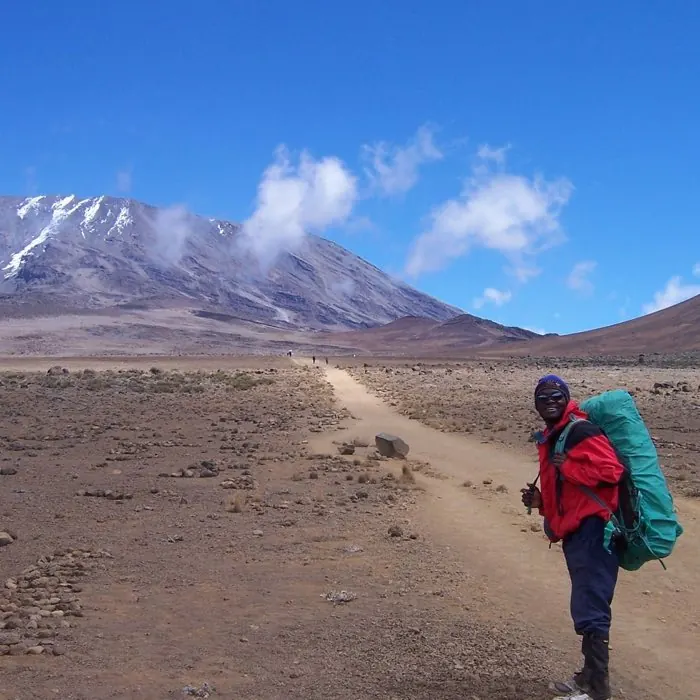
Every Kilimanjaro climb runs on porters. They carry the tents, the food, the water and your duffel, and they do it faster than you will walk while carrying more. How an operator treats them is the clearest signal you have about that operator, and it is almost never on the website.
Why it is a real issue
The mountain is a major employer and competition on price is brutal. When a climb is sold too cheaply, the saving does not come out of park fees, which are fixed. It comes out of wages, food, and gear for the crew.
What to ask
- What do porters get paid, per day? A vague answer is an answer.
- What weight do they carry? There is a park limit. Ask whether it is respected and whether loads are weighed at the gate.
- Are they fed the same number of meals as climbers?
- Where do they sleep, and in what? Proper tents and sleeping mats, or whatever is left over.
- Do they have boots and jackets for the summit push? Some are supplied, some are lent, some are neither.
- Is tipping on top of a fair wage, or instead of one? It should be on top.
Tipping
Tips are customary and expected, and they matter to the crew. Budget for them from the start rather than treating them as an optional extra at the end. Your guide can explain the usual amounts and how they are shared, and a good operator will hand you a clear guideline rather than leaving you guessing.
What you can do on the mountain
Learn some names. Keep your duffel within the weight limit so nobody is carrying your excess. Say hello when they pass you, which they will, repeatedly, while carrying a tent.
Where we stand
Our crew are from Arusha and the villages around the mountain. They are paid properly, fed the same food, and given the gear they need. We would rather lose a booking to a cheaper quote than run a climb that works because someone else went without.